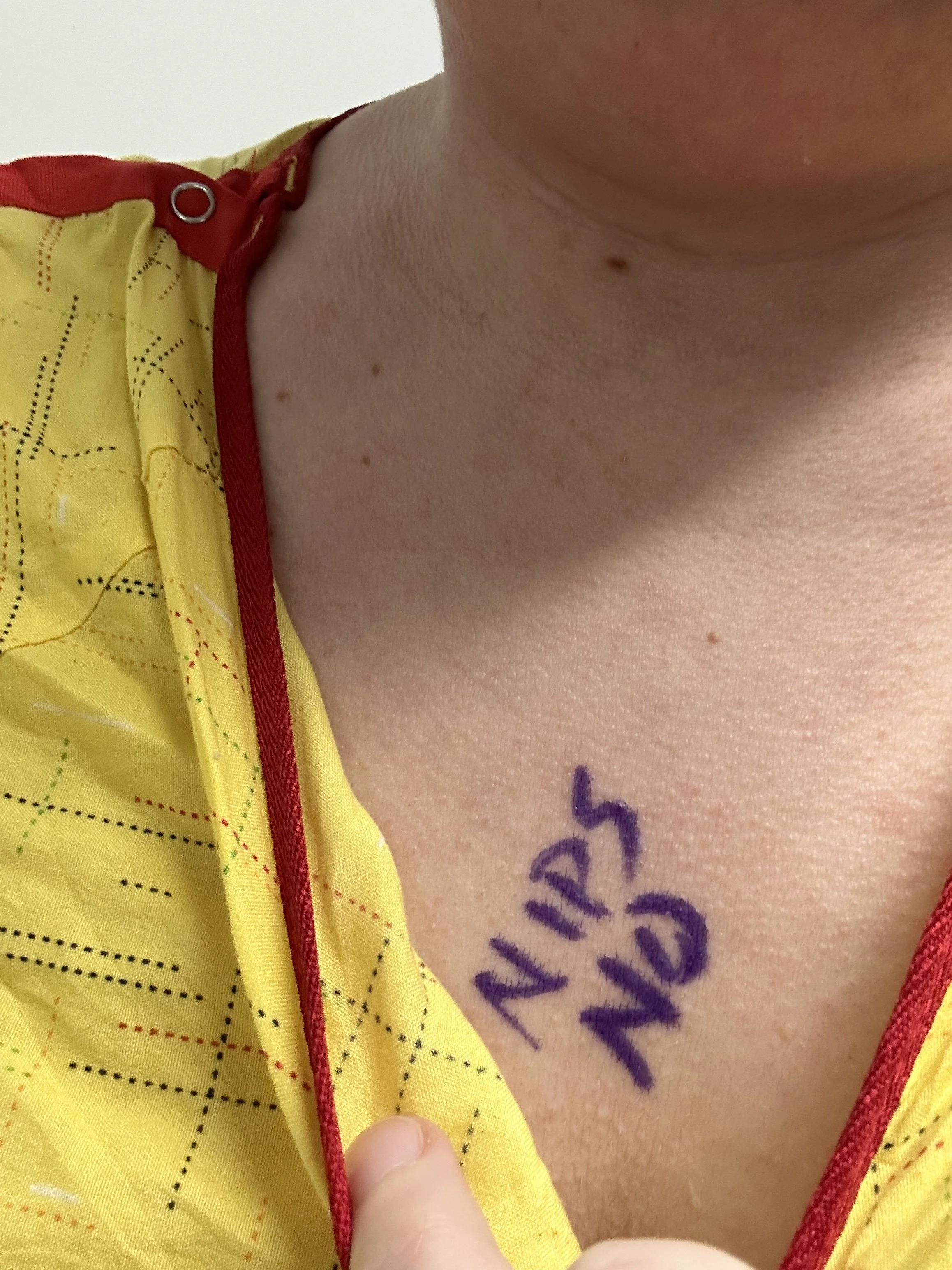
In December, I had surgery that, in clinical terms, is called a “simple bilateral mastectomy,” but for LGBTQ+ folx, is otherwise known as top surgery or gender affirming surgery. It is a surgery (for FTM or FTX) that flattens the chest in order to relieve feelings of gender dysphoria (or create feelings of gender euphoria) and bring the patient’s body more in alignment with their gender identity. I had been looking forward to the surgery for quite some time, even lamenting during my appendectomy over the summer that it wasn’t the surgery I wanted to be having (I’ve had a lot of surgical procedures last year).
When the day came, I was excited when I changed into my gown. I threw out my bra with a cheer and I was gleeful when I woke up. I was able to sit up easily, there was no constant pain from a bra strap rubbing on my defibrillator, and I loved the way I looked. I was instantly far less self conscious and felt excited to see what it would look like once healed.
Except, there were massive, life-threatening complications to come.
Four days after surgery, I was back at the hospital in the Emergency Department, with large bilateral pulmonary embolisms and deep-vein thrombosis in my right calf. As my case was severe, I was monitored in the ICU as I was given the clot-buster TPa and then put on a blood-thinner.
I needed to have an emergency surgery a week after my original surgery, because there was a massive hematoma that had to be evacuated out of my left chest. It was so big it started to look as if I was growing back what had just been taken off. I will always be grateful to my plastic surgeon because, after I woke up from the second surgery, he walked in and said joyfully, “You’re flat again!”
Dr. Yost, you positively rock.
The care I received was excellent and I am grateful to the hospital staff saving my life. The hard part though, was the awkwardness of all the questions whenever I met someone knew. Since the blood clots were provoked by a surgery, they were trying to understand what type of surgery I had received. But being asked why I’d received a mastectomy invariably ended up with people calling it “elective.”
Before my LGBTQ+ brethren go grab your pitchforks, I want to say I understand they were trying to distinguish it from surgery due to cancer which, I was told, is 9/10 cases. That information would have impacted how they treated my condition, so it was an important distinct to ascertain. However, (now go grab your pitchforks), it stung every single time because it sounded like I was being accused of putting myself in the position of nearly dying by “choice.”
This procedure was a quality of life decision, just like when I had my appendix removed—just because I wasn’t in constant physical pain because of it, doesn’t make it any less necessary.
And for the record, putting aside the ethical and moral arguments, everyone should agree that top surgery is not elective. Why? Because my insurance company paid for it. Have you met insurance companies? They don’t pay for anything they can categorize as elective (supporting fact: I had extreme anemia after the surgery and they did not want to pay for a $12 prescription of iron supplements. Twelve. Dollars. You think they wouldn’t try to weasel their way out of a thousands+ surgery?).
It’s been over a month now and my internal struggles with the “necessity” of the surgery are starting to ebb as I heal. I finally drove my car again after seven weeks—I’ll hopefully be able to return to my p/t substitute librarian job next month. I haven’t been able to go clothes shopping, but maybe in the spring. I would like to actually celebrate making this choice for myself and surviving the unexpected consequences.
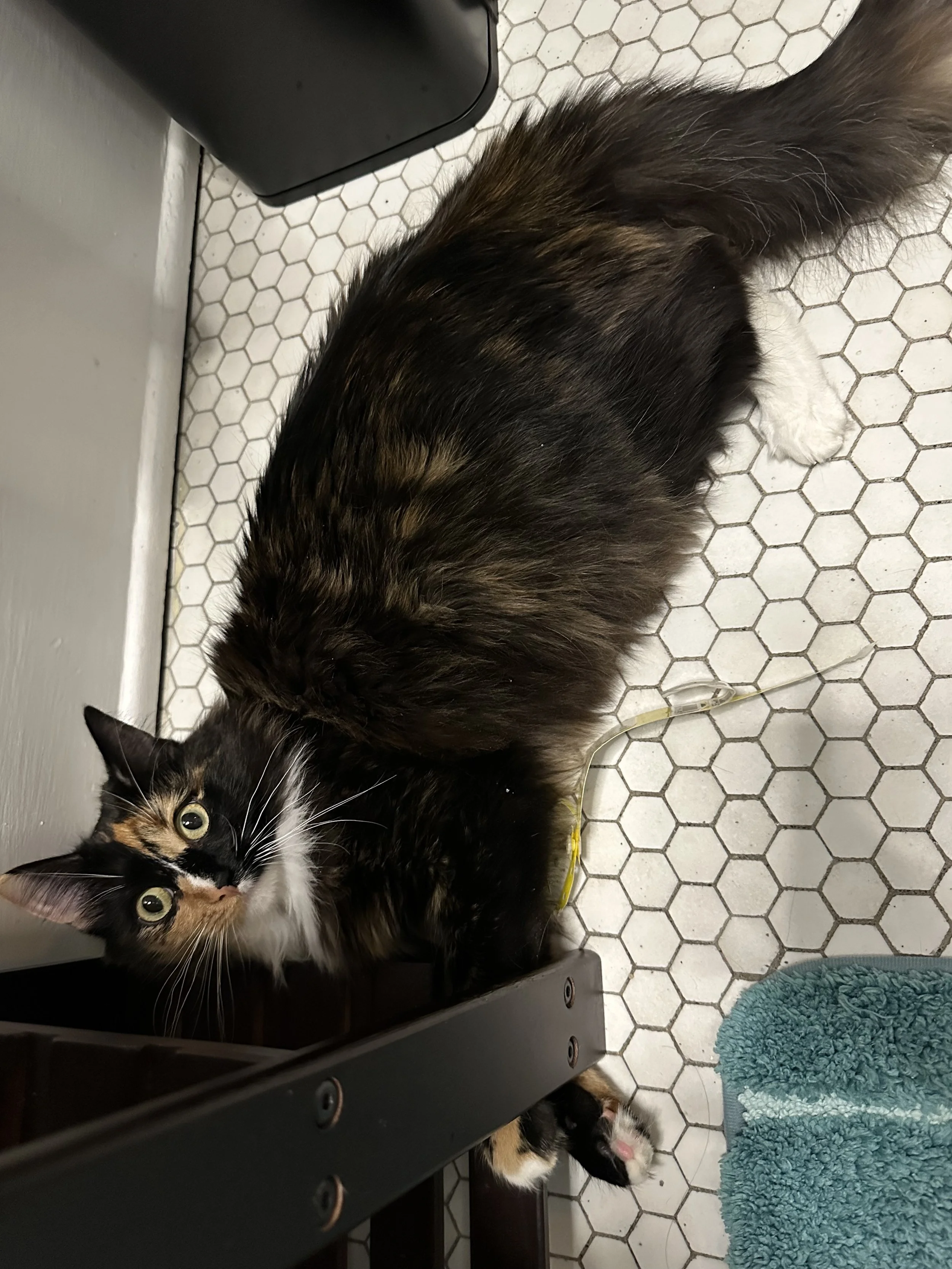
At least, in the end, hospital bracelets make excellent cat toys.